
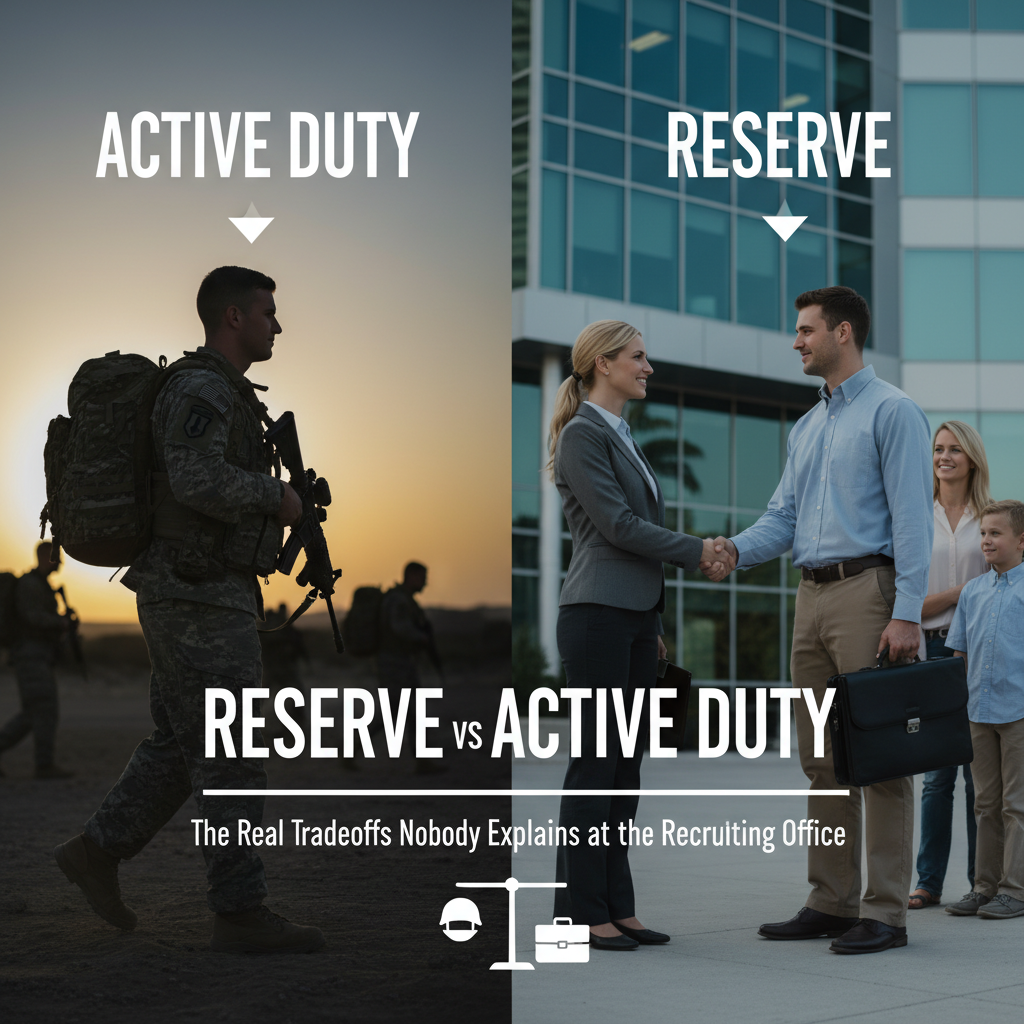
Compensation: The Honest Math
Active duty compensation looks higher on a basic pay comparison, but the full picture requires including the non-taxable allowances that significantly increase effective income. An active duty E-5 with dependents living off-post receives base pay plus BAH plus BAS — depending on location, the allowances can add $1,500-2,500+ per month. The total compensation package is substantially larger than the base pay figure.
Guard and Reserve compensation for drill weekends is two days of base pay for the weekend, plus one day of base pay per training day for Annual Training. There’s no BAH or BAS outside of activation periods. The “one weekend a month, two weeks a year” framing dramatically undersells how part-time the compensation actually is relative to active duty.
The Guard and Reserve advantage: civilian income. Most part-time service members maintain civilian careers where their military experience often commands premium compensation. That’s what makes the combination endearing to mid-career professionals — a civilian salary plus part-time military pay can exceed active duty total compensation, particularly in high-cost-of-living areas with strong civilian pay scales.
Healthcare: A Significant Difference
Active duty members and their dependents receive TRICARE Prime coverage with no premiums and minimal cost-sharing. This is one of the most significant components of the total compensation package that rarely gets the weight it deserves in comparisons.
Guard and Reserve members in a non-activated status don’t receive free TRICARE coverage. TRICARE Reserve Select is available for purchase at rates below commercial insurance but above zero. For families with significant healthcare utilization, the difference between free TRICARE and a TRS premium is a meaningful cost. I’m apparently someone who forgot to account for healthcare costs when calculating the Guard vs. active duty math until it showed up on an actual bill.
Career Stability vs. Flexibility
Active duty provides stable income and a structured career progression. It also means limited control over where you live — PCS moves every 2-4 years are the norm, and family stability (schools, spouse employment, social networks) takes repeated hits. Guard and Reserve members control their geography. They can build roots in a community, maintain a stable school situation for kids, and support a spouse’s career without the disruption of frequent relocation.
Retirement: Where Active Duty Wins Clearly
Active duty retirement at 20 years provides a pension — an immediate annuity from the day you retire. A 20-year retirement at O-5 pays roughly $3,500-4,500/month guaranteed income for life beginning at a relatively young age. If the pension is central to your financial plan, the active duty path is the one that delivers it on the timeline most people assume when they hear the word “military retirement.”



Leave a Reply