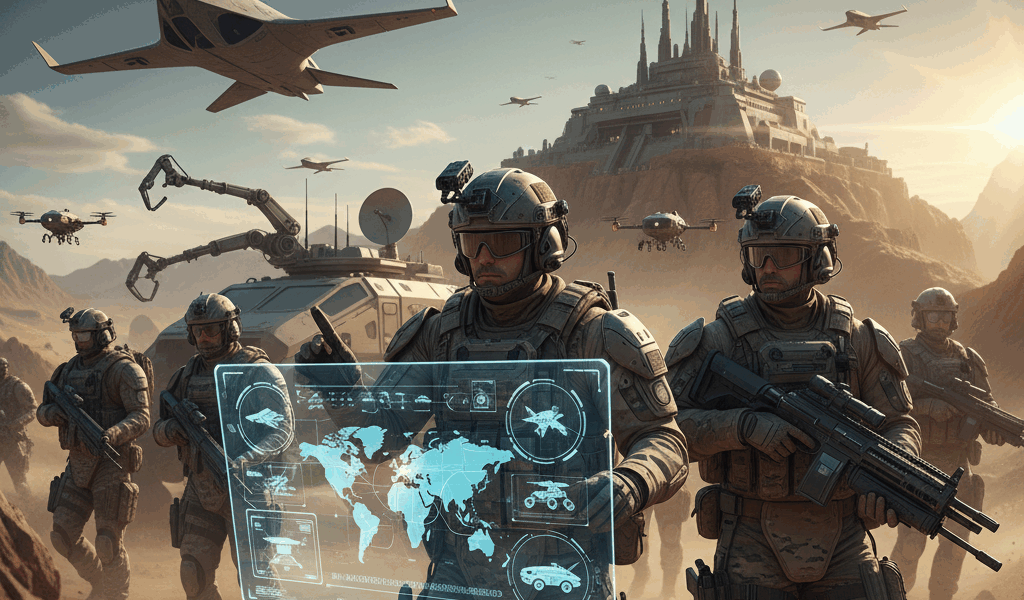
The character of warfare is changing faster than at any point since the advent of nuclear weapons. The Department of Defense is undertaking a sweeping modernization effort to ensure American military dominance in an era defined by artificial intelligence, hypersonic weapons, space-based capabilities, and information warfare.

The Great Power Competition
For two decades, the U.S. military focused primarily on counterterrorism and counterinsurgency operations. The current National Defense Strategy marks a decisive pivot toward great power competition, particularly with China and Russia.
This shift has profound implications. The weapons, tactics, training, and force structure optimized for fighting irregular adversaries are not necessarily suited for potential conflicts with near-peer competitors who possess advanced air defenses, cyber capabilities, space systems, and precision-guided munitions.
Thats what makes this modernization effort different from routine upgrades — its a fundamental reorientation of what the military is designed to do.
Chinas military modernization has been particularly dramatic. The Peoples Liberation Army has invested heavily in capabilities specifically designed to counter American strengths, including anti-ship missiles that threaten carrier strike groups, anti-satellite weapons that could blind military communications, and a rapidly expanding nuclear arsenal.
Key Capability Areas
Several capability areas are receiving concentrated investment as the military prepares for future challenges.
Artificial Intelligence: AI is being integrated across military operations, from intelligence analysis to logistics optimization to autonomous systems. The Pentagons AI strategy emphasizes maintaining competitive advantage while establishing ethical guidelines for AI use in warfare.

Hypersonic Weapons: Both offensive hypersonic missiles and defensive systems to counter adversary hypersonics are under development. These weapons, traveling at speeds exceeding Mach 5 and capable of maneuvering in flight, present significant challenges to existing air and missile defense systems.
Space Operations: The establishment of Space Force reflects recognition that space is now a contested warfighting domain. Protecting American satellites while holding adversary space assets at risk is increasingly central to military planning.
Cyber Capabilities: Offensive and defensive cyber operations continue to evolve. The ability to disrupt adversary command and control while protecting American networks is essential to military effectiveness.
What This Means for Service Members
For current and prospective service members, these changes mean evolving skill requirements, new career fields, and shifting organizational structures. Technical expertise is increasingly valuable. Understanding cyber, space, and information operations opens career opportunities that didnt exist a decade ago.
The military of 2030 will look different from the military of 2020. Preparing for that future means staying informed about where the services are heading and positioning yourself to contribute to the capabilities that will matter most.




Leave a Reply