 All-Branch PT TrackerMilitaryFitTrack Army ACFT, Navy PRT, Marine PFT, and Air Force PT scores in one app. Built for service members across branches.Download for iPhoneGet it on Google Play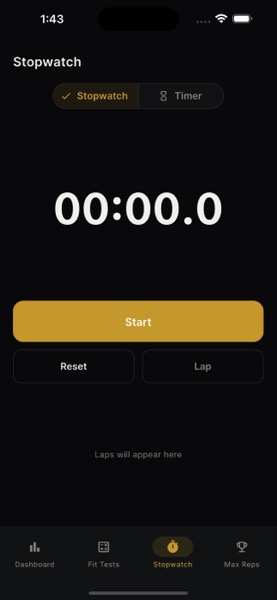
The four major US service branches each have their own physical fitness test, with different events, different scoring systems, and different definitions of “passing.” A recruit deciding between branches, a transitioning service member moving between components, or a joint-service operations professional working across branches needs to understand all four. Even within the joint community, knowing your own test is the basic requirement — but understanding the others builds the context for cross-branch fitness culture.
Here’s the four-test comparison as of 2026, with practical training implications.
Army Combat Fitness Test (ACFT)
The Army’s six-event test, established as the official replacement for the Army Physical Fitness Test (APFT) and refined through several iterations:
- 3-Repetition Maximum Deadlift (MDL) — strength
- Standing Power Throw (SPT) — explosive power
- Hand-Release Push-Ups (HRP) — upper body endurance
- Sprint-Drag-Carry (SDC) — anaerobic agility
- Plank (PLK) — core endurance
- Two-Mile Run (2MR) — aerobic capacity
Scoring: 0-100 per event, 360 combined minimum (60 per event). MOS-specific minimums apply for combat arms and special operations.
Distinguishing characteristic: the deadlift event makes the ACFT the most strength-biased of the four tests. A soldier needs functional lower-body strength to score well.
Navy Physical Readiness Test (PRT)
The Navy’s three-event test, simpler than the ACFT:
- Curl-ups (forearm plank in some variants) — core
- Push-ups — upper body
- 1.5-Mile Run, 500-Yard Swim, or 2K Stationary Bike — aerobic
Scoring: Excellent / Good / Satisfactory / Failure based on age/sex tables. Multiple failures can result in mandatory remedial training and impact retention.
Distinguishing characteristic: the swim/bike/run choice. Sailors and Marines who serve aboard ships can use the swim option year-round if pool access is available. The flexibility recognizes that ship-based service doesn’t always permit dedicated running time.
Marine Corps Physical Fitness Test (PFT)
The Marine Corps PFT is three events with strict scoring:
- Pull-ups (or push-ups for those who cannot do pull-ups, scored differently)
- Crunches (or plank in some variants)
- 3-Mile Run
Scoring: 1st Class / 2nd Class / 3rd Class / Failure based on age/sex tables.
Distinguishing characteristic: pull-ups are scored higher than push-ups, making the PFT one of the most upper-body-strength biased tests. A Marine who can do 20 pull-ups is in elite territory; achieving that is a multi-month training commitment.
Air Force Fitness Assessment (PT Test)
The Air Force has gone through several iterations in recent years. The current PT Test is four events:
- Push-ups (1-minute timed)
- Sit-ups OR Plank (event choice)
- 1.5-Mile Run (or 20-Meter Shuttle Run for those medically restricted)
- Optional: alternative cardio for medical waivers
Scoring: 0-100, with components weighted (run typically 60 points, push-ups and core events 20 each). Combined score determines pass/fail and category (Excellent / Satisfactory / Unsatisfactory).
Distinguishing characteristic: the Air Force test is most run-weighted of the four. A solid runner can score 90+ without exceptional strength. The recent addition of the 20-meter shuttle alternative addresses medical waiver scenarios.
Cross-Branch Comparison Table
| Events | Strength Bias | Aerobic Bias | |
|---|---|---|---|
| Army ACFT | 6 | High (deadlift, throw, push-ups) | Moderate (2-mile run) |
| Navy PRT | 3 | Moderate (push-ups, curl-ups) | Moderate (1.5-mile or swim) |
| Marine PFT | 3 | High (pull-ups) | High (3-mile run) |
| Air Force PT | 3 | Low (push-ups, sit-ups/plank) | High (1.5-mile run, run-weighted) |
The ranking of “hardest test” is subjective and depends on the soldier’s body type and training history. A natural runner finds the Air Force test easiest. A natural lifter finds the ACFT easiest. A balanced athlete probably finds the Marine PFT most demanding because both pull-ups and the 3-mile run are challenging.
Joint Service Considerations
Service members in joint billets and certain assignments encounter cross-branch fitness situations:
Inter-service exchange programs. Soldiers exchanged to Navy or Marine units may be required to take the host service’s test. Sailors at Army or Marine schools may take Army or Marine standards.
Special operations. Joint Special Operations Command (JSOC) units bring together personnel from all four branches. Each typically retains their branch’s annual PT test but cross-trains on all four.
Recruiting and ROTC. Recruits selecting between branches should consider which test fits their body type and training preferences. A natural runner might score better in the Air Force; a natural lifter in the Army.
Transition between branches. Service members who transition from one branch to another (rare but happens — Reserve component changes, inter-service transfers) must adapt to the new test within a defined window. Cross-training during transition smooths the change.
MILITARY FITNESS APPMilitaryFitTrack ACFT, PRT, PFT, and Air Force PT in one appDownload for iPhoneGet it on Google PlayTraining for Joint Standards
For service members training for their own branch but who occasionally need cross-branch capability:
If your test is the ACFT — your training already includes deadlift, sprints, and the 2-mile run. To handle the Marine PFT, add pull-ups (or pull-up regressions) twice weekly. Air Force test would be straightforward with your existing aerobic base; Navy test similar.
If your test is the Marine PFT — your pull-ups and 3-mile run are well above baseline. To handle ACFT, add deadlift training. Air Force and Navy tests are easy transitions for a fit Marine.
If your test is the Navy PRT — your push-ups, sit-ups/plank, and 1.5-mile run are solid. ACFT requires adding deadlift and the more complex events. Marine PFT requires pull-up training and longer run distance.
If your test is the Air Force PT — your run is strong. ACFT needs significant strength work added. Marine PFT requires the pull-up commitment and longer run.
What the App Does Well
For service members who need to track multiple tests or want to see their progression across multiple metrics:
- One app with all four branches’ scoring tables
- Event-by-event tracking over time
- Projected score based on recent training data
- Age/sex banding handled automatically
- Compare scores across branches to see relative fitness profile
For recruits comparing branches: enter realistic estimates of your current fitness and see how each test would score. Often clarifies which branch’s test fits your body type best.
For joint-service members or special operations candidates: track all four tests’ performance to demonstrate readiness across the spectrum.
The Common Mistake Across All Four Tests
Service members who fail PT tests usually fail because of one specific weak event — and rarely the same event year over year. Identify your weakest event and train it specifically. The ACFT plank, the Marine pull-up, the Air Force run, the Navy sit-up — whichever is your bottleneck, that’s where the score gain lives.
The data-driven approach (track, identify weakness, train it specifically) outperforms general fitness training for PT test outcomes. Don’t train for “fitness in general.” Train for your specific test’s specific events.
Action Items
For service members preparing for any PT test:
1. Know your scoring tables. Print or screenshot your branch’s official scoring tables. The 60-point and 100-point thresholds for your age/sex band define your training targets.
2. Identify your weakest event. Mock-test all events. The lowest-scoring event is where you spend extra training time.
3. Track training sessions. Without data, you’re guessing. With data, you can see whether the program is working.
4. Plan a 12-week prep cycle. Mock tests at weeks 6 and 10 to calibrate. Taper week 12.
5. For joint-service or cross-branch awareness, install tools that handle all four tests. Cross-branch context helps you understand the broader military fitness culture.
MILITARY FITNESS APPMilitaryFitMilitaryFit— Track All Four Service PT TestsDownload for iPhoneGet it on Google Play

Leave a Reply