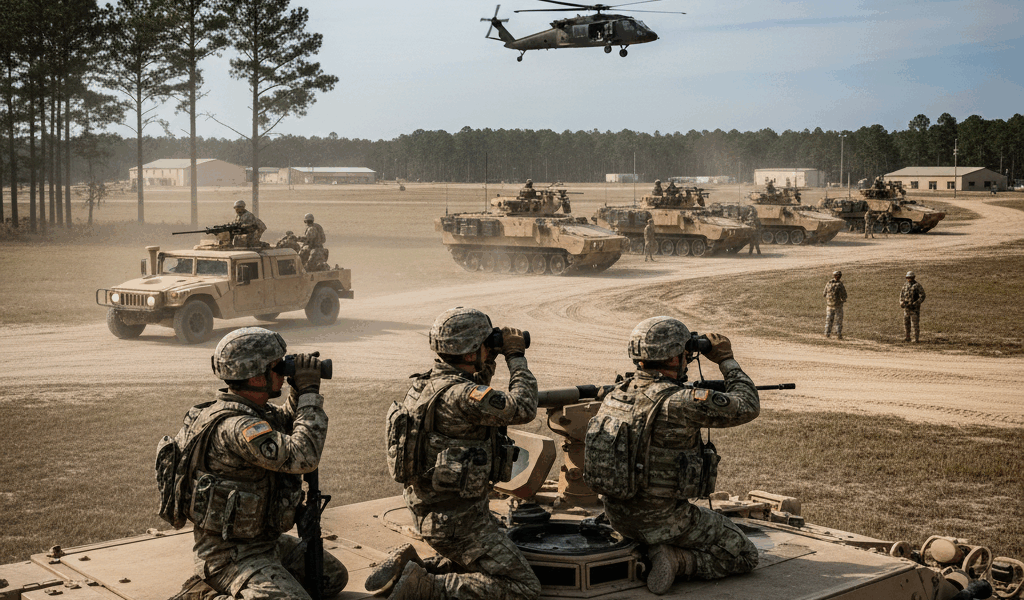
Fort Liberty, formerly known as Fort Bragg, is one of the largest military installations in the world and home to Army Special Operations Command, the XVIII Airborne Corps, and tens of thousands of soldiers and their families. Life on this sprawling North Carolina installation offers a window into how modern military communities function and thrive.
From reveille to retreat, Fort Liberty pulses with activity. Understanding what daily life looks like helps prospective service members know what to expect and helps civilians appreciate the complex communities that support American military readiness.
Morning Formation and Training
The day begins early on Fort Liberty. Physical training typically starts around 0630, with soldiers gathering in company or platoon formations for organized exercise. The crack of first sergeants calling their units to attention echoes across countless PT fields as the sun rises over the pine forests.
After PT, soldiers shower, eat breakfast at dining facilities or unit footprints, and prepare for the training day. The nature of that training varies enormously depending on unit mission. Special operations soldiers might be preparing for jump training at Sicily Drop Zone, while conventional units conduct rifle marksmanship at one of the installations many ranges.
The sound of artillery at surrounding training areas, the rumble of C-130 and C-17 aircraft from Pope Army Airfield, and the whir of helicopters are constant background noise. Thats what makes Fort Liberty feel like a military installation rather than just a big office complex — the training tempo is constant and visible.
The Infrastructure of a Military City
Fort Liberty is essentially a self-contained city with a population that rivals many mid-sized American municipalities. The installation includes its own hospital, Womack Army Medical Center, which provides comprehensive medical care to service members and their families.

Shopping needs are met through the Main Post Exchange, a full-service department store, and the commissary, a grocery store offering tax-free products at discounted prices. Banks, restaurants, a movie theater, bowling alley, golf course, and numerous recreational facilities dot the installation.
Housing options range from barracks for single soldiers to on-post family housing of varying sizes and quality. Many families choose to live in the surrounding communities of Fayetteville, Southern Pines, and Spring Lake, taking advantage of off-post amenities while maintaining easy access to the installation.
Family Life and Support Systems
Military families at Fort Liberty have access to extensive support systems. Child Development Centers provide childcare, crucial for dual-military families and households where spouses work. Schools on post serve military children, offering educational continuity regardless of how many times a family has relocated.
Family Readiness Groups organize unit-level support, especially important during deployments when spouses and children need community connection. Army Community Service offers classes, counseling, and assistance programs ranging from financial planning to relocation support.
The rhythm of military life — deployments, training rotations, PCS moves — creates unique stresses that these support systems are designed to address. The quality of family support often determines whether military careers succeed or end prematurely.
The Reality of Service
Life at Fort Liberty is demanding. Long hours, physical training, field exercises, and deployments take their toll. But for many soldiers and families, the sense of purpose, the community bonds, and the opportunities for service make it worthwhile. Understanding both the challenges and rewards helps anyone considering military service make informed decisions.



Leave a Reply